The Stolen Valor That Nobody Talks About
Stolen valor is usually understood as someone pretending to be a soldier, exaggerating their service, or wearing medals they never earned. There is a law intended to punish those who do. The offense is clear and understandable. It is the theft of honor through lies.
Yet, when we focus on the word ‘honor‘ and truly consider its meaning, we must admit that there is another kind of stolen valor that is rarely acknowledged. It is not the act of fabricating service but of corrupting the meaning of service. Instead, it is when those who actually wore the uniform leverage the respect that comes with it to push unconstitutional narratives and agendas. Unfortunately, no law or punishment exists for this type of offense. Frankly, this is a case of stolen valor of the highest order, as it twists the very oath that gave them legitimacy in the first place.
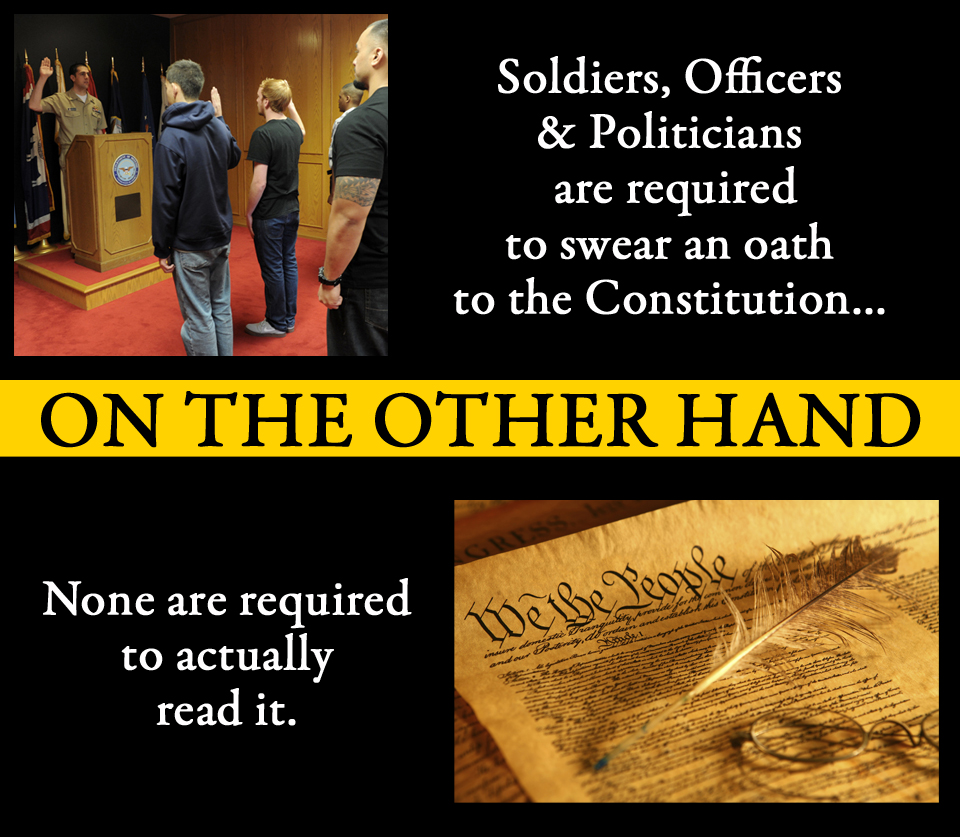
Every soldier swears an oath to support and defend the Constitution against all enemies, foreign and domestic. That oath is not symbolic. It is not ceremonial. It is the core condition under which the public entrusts the military with honor, respect, and authority. It is the foundation upon which they seek honor.
The respect shown to veterans and service members comes from the belief that they stood as defenders of constitutional order. However, when someone uses that earned respect to push unconstitutional ideas, they are stealing. They are stealing the legitimacy granted by their oath to subvert the very document they swore to protect. They are, in fact, violating the oath under the guise of being a defender.
In my opinion, this theft is more corrosive than the faker in surplus store fatigues. Sure, the faker is pathetic, but he never held the power to begin with. The oath-breaker who wears his real service like a shield while betraying its meaning is far more dangerous. He or she is not stealing valor from others but from the people and the Republic itself. The uniform becomes a weapon. The title “veteran” becomes a cover. The respect of citizens becomes currency in a campaign to erode constitutional principles. It is absolutely disgraceful.
This is not about disagreement in politics. The Constitution permits debate, dissent, and competing visions. However, it does not permit those who swore to uphold it to hide behind their service while attacking it. When a former soldier invokes his status to justify violating free speech, undermining due process, getting rid of firearms, or ignoring separation of powers, that is stolen valor. When an active duty soldier suggests that military loyalty supersedes constitutional authority, that is stolen valor. When either of them attempts to pass off unconstitutional agendas as patriotism, that is stolen valor.
The truth must be said plainly. Military service does not grant anyone a permanent exemption from the law. It does not grant lifetime authority to distort the Constitution for personal, political, or ideological ends. To the contrary, the oath binds tighter. If you use the credibility of your service to betray the Constitution, you have engaged in an act of fraud. You are parading as a defender while functioning as an adversary. That is the essence of stolen valor.
The public must learn to see this for what it is. Respect for service must never be respect for betrayal. Citizens owe veterans and active-duty members honor for their sacrifices, but they do not owe them obedience when they abandon their oath. A uniform or a record of service does not sanctify unconstitutional behavior. To remain silent when service is misused in this way is to allow stolen valor to spread unchecked.
The stolen valor nobody talks about is not in the surplus store or on a parade field. It is in the rhetoric of those who invoke their service to corrode the Constitution. It is in speeches, interviews, and social media posts where rank and ribbons are used as credentials to justify disloyalty to the oath. It is a fraud more dangerous than false medals, because it erodes the foundation of liberty.
Those who swore the oath have only two choices. Honor it or betray it. There is no middle ground. If they honor it, they remain worthy of the respect they earned. If they betray it, they have committed stolen valor, and they should be called what they are: impostors in spirit, regardless of their service record.
The Other Side of the Oath: Law Enforcement
This form of stolen valor is not confined to the military. Law enforcement officers also swear an oath to uphold the Constitution. The badge is not a license to bend the law to personal preference or political convenience. It is also not a license to trample individual liberties in the name of “officer safety” or hurt ego. The badge is supposed to be a symbol of responsibility rooted in constitutional authority.
When officers use their status to push or defend unconstitutional agendas or laws, they, too, engage in stolen valor. For example, a sheriff who leverages his position to argue against due process, a police chief who invokes authority to sidestep constitutional rights, or a retired officer who trades on past service to justify eroding liberty, each of these cases represents theft. They are borrowing the honor and legitimacy of their oath while abandoning the duty that gave it meaning. There is no honor here. Hence, they will receive no respect, at least not from me.
To me, the danger is the same. Just as the uniform of a soldier must never be weaponized against the Constitution, neither should the badge of an officer. Both are trusted symbols of defense, not instruments of betrayal. When the oath is abandoned, the authority it bestows is hollow. What remains is a façade (a counterfeit of honor) that is itself a form of stolen valor. These people are not to be celebrated. Those who wear the symbol while denying the substance reduce themselves to little more than enforcers or tax collectors, and such figures command neither respect nor trust.
As for those who would impersonate an officer, they should think carefully. Why mimic someone who swears an oath they have no intention of honoring? Why dress as a public servant who scarcely understands what they are sworn to defend? To impersonate such a figure is to impersonate emptiness, or ignorance, or tyrants. Or more to the point, an office stripped of morality and integrity.
What Should Be Done
Understanding this hidden form of stolen valor is only the first step. The public must refuse to give a free pass to those who exploit their service or badge to undermine the Constitution. Service is worthy of respect only so long as the oath is honored. It seems to me that if you betray your oath, especially while using your service for clout, you are either a liar, a hypocrite, a traitor, or simply an enemy.
When a veteran, soldier, or officer speaks, their record deserves recognition, but not blind obedience. However, the Constitution (not the uniform) remains the standard of judgment. Of course, that requires citizens to know what they are defending. You cannot support, love, defend, or exercise something you do not know. Neither can these supposed “Constitutional Defenders.” Moreover, citizens must train themselves to distinguish between loyalty to the oath and loyalty to the individual. If someone uses their service to promote unconstitutional agendas, that betrayal must be called out as a form of stolen valor. Again, there is no honor there.
And finally, I will say that the duty to defend the Constitution does not rest only with those who swore the oath. It rests with every citizen who benefits from it, as well as those who have pledged their allegiance to it. Naming this form of stolen valor, refusing to tolerate it, and holding oath-breakers accountable are the ways to ensure that respect for service remains tied to fidelity, not fraud.
Yet, honoring genuine service requires more than saluting anyone who dons a uniform or holds a role associated with authority. Almost anyone can obtain a position, collect a badge, or wear the symbols of duty. What distinguishes a true defender of the Constitution is not the uniform, but the character behind it. It is the willingness to uphold the limits of lawful power, the discipline to honor the oath even when it is inconvenient, and the courage to restrain oneself when restraint is what the Constitution demands. A uniform is fabric. An oath is a promise. Only one of them proves loyalty.
Just something to think about.