The Modern Marriage Paradox
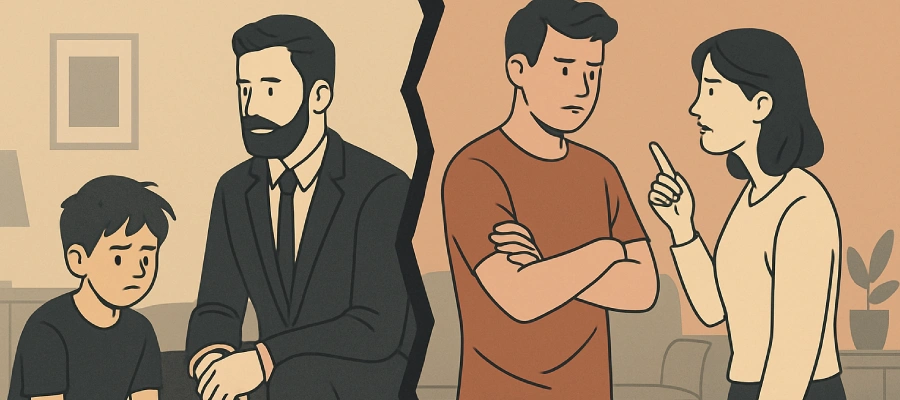
Marriage is one of the oldest human institutions, yet in modern society it has become one of the least understood. People talk about love and compatibility, but most divorces have little to do with either. What destroys marriages today is not mystery, systemic oppression, or fate. The problems are usually rooted in avoidable human behavior that takes shape long before the vows are spoken.
If you pay attention, you can see that a pattern of growth is emerging in Western societies. For geopolitical reasons that most may never fully understand or appreciate, many women openly resist traditional gender roles, yet still expect men to maintain theirs. The arrangement becomes asymmetrical. He is still expected to earn the bulk of the money, protect the home, repair what breaks, absorb her emotional volatility, and meet a long list of height, income, and personality standards. She, on the other hand, can opt out of her traditional expectations without penalty and often with cultural approval.
This imbalance is not about equality. It is about unrealistic expectations. It asks men to act like traditional men in every category except authority and leadership. It asks women to act as they please while still enjoying the benefits of the older arrangement. When that system predictably fails, divorce follows.
The statistics tell a story most people prefer to avoid. Women initiate the majority of divorces, lesbian couples have the highest divorce rates of all pairings, gay male couples have the lowest, and heterosexuals are somewhere in the middle (1, 2, 3, 4, 5, 6). These numbers are not political arguments, and we’re not going to argue the nuances today (because there are some to consider). For our purposes, we just need to appreciate that these behavioral patterns reveal important insights and hints into the psychology of commitment and relational stability.
Some argue that men are responsible for most marital problems, despite the fact that they are not the ones ending most marriages. Nonetheless, that claim is difficult to support when examined through a behavioral lens. If we remove polite phrasing and confront the subject directly, we probably need to admit that the leading cause of divorce is immaturity. This is not an insult. It is an observable pattern in how people approach discomfort, conflict, expectations, and emotional discipline.
Think about what immaturity truly is. If immaturity involves difficulty regulating emotions, mismanaging conflict, holding unrealistic expectations, acting impulsively, and struggling to tolerate discomfort, the question becomes unavoidable. So, which sex is more likely to exhibit those behaviors at the point of marital breakdown? Data on divorce initiation, emotional volatility, and stated grievances offer a clear direction. Don’t get all emotional here, but the uncomfortable truth is that the behavioral traits associated with immaturity are more often exhibited by the group that initiates the majority of divorces.
Now, this does not absolve men. Men have their own set of problems. I have seen the arguments, and I tend to agree with women who suggest that too many men lack practical skills, emotional resilience, or the confidence to lead. Some might take it a step further and say that many men struggle with basic household competence. Heck, I would push further and say that many avoid conflict until resentment builds, and that too many disengage when they feel unwanted or undervalued. Even I am guilty of that. Indeed, these issues are very real, but they are also secondary symptoms. The deeper question is why so many men struggle to become capable, mature men in the first place.
Well, the answer may be simpler than society wants to admit. The truth is that boys require strong male role models to learn how to become men. They need to see responsibility, leadership, restraint, and perseverance modeled by adult men who embody them. When fathers are removed from the home, boys are raised in an environment that does not contain the one thing they need most. This is to say that a boy raised primarily by someone who does not understand the internal pressures of manhood will not learn how to handle those pressures on his own. That’s just how that works.
Worse still, many boys are raised by mothers who are angry at men. The resentment that led to the end of the marriage becomes the emotional climate in which the child develops. The boy learns to internalize that men are disposable. He learns to avoid masculinity because his earliest authority figure treats masculinity as a threat. He grows into a man shaped not by what men are, but by what his mother wished men were. I’m sorry, but that does NOT produce strength. If anything, it produces fragility and weakness.
A useful analogy can be found in the natural world. Certain bird species, such as the common cuckoo, lay their eggs in the nests of other birds. The hatchling imprints on the adults that raise it and assumes their behaviors, even though it is not their kind. Upbringing often overrides instinct because the young learn their identity from the person who serves as their model. Human development is no different. When a boy grows up without a father or a father without a healthy masculine template, he will imprint on whatever is available, even if it does not resemble the role he is biologically meant to grow into. The result is a man who carries the behaviors he witnessed rather than the ones he needed.
Guess what that means? A man raised to be harmless will not become helpful. A man raised to avoid conflict will not learn how to resolve it. A man raised in an environment hostile to masculinity will grow into an adult who fears his own nature. Similarly, a volatile mother creates nervous and insecure adults. I could go on, but the point is that these boys become the young men women later complain about, the ones who cannot fix anything, lead anything, or stand firm under pressure. Ultimately, they become someone a woman cannot respect, but largely because the young man doesn’t know how to respect himself, or worse, is afraid to. After all, they were shaped by a system that replaced masculinity with resentment.
Of course, a similar pattern emerges for girls raised in homes that are hostile toward men. Girls raised to hate men likely will, despite their innate desire to partner up. Match that with “girl power” narratives that frown on listening to a man, and you have a recipe for failure and heartache. This isn’t hard, but you have to think in terms of cause and effect to see the fallout.
Parents have a responsibility to raise respectful little girls who grow into respectful young women. A household shaped by misandry, chronic contempt for men, or constant narratives of male inferiority does not typically produce partners capable of empathy, cooperation, or relational stability. Remember that children absorb the emotional environment in which they are raised, and girls who grow up hearing men belittled or dismissed often internalize those patterns as normal. In adulthood, that mindset appears as disrespect, volatility, and an inability to form collaborative partnerships. If you want your little girls to become happy adults, then you must act accordingly. Teaching girls to respect themselves and others, to value responsibility, and to see men as allies rather than adversaries is essential for building healthy families and strong marriages.
Anyway, like I said, none of this is said to vilify women or absolve men. It is said to point out a structural truth in modern family breakdown. When the sex most likely to initiate separation repeatedly removes fathers from homes, the long-term consequences land hardest on the sons. Those sons then become the men society ridicules for their lack of competence. The cycle feeds itself. Perhaps this is some insight into the famous notion that “weak men create hard times.” Now, just imagine where this ends for society, let alone marriage.
The point is that marriage cannot survive when expectations are asymmetrical and development is fractured. Stability requires two adults who understand responsibility, tolerate discomfort, regulate emotion, manage conflict, and respect one another’s roles. Until the culture is willing to confront who is removing those conditions and why, certain marriages will continue to decline, and men will continue to arrive at adulthood unprepared for it.
These are not accusations. They are considerations. At the same time, they are the real patterns that surface when emotion is removed from the discussion and behavior is examined honestly. However, let’s discuss what we can do moving forward. Because there are forces shaping modern relationships and the habits that undermine stability long before a marriage begins. I want to help individuals understand what they are choosing, what they are repeating, and what they are bringing into their future families.
As alluded to earlier, every generation inherits the consequences of the one before it. Young people today did not create the cultural confusion around gender, roles, expectations, and emotional responsibility, but they are the ones who must navigate it. They are the ones who will face the danger unprepared. They deserve some clarity about what leads to stability and what leads to collapse. They deserve a practical understanding of how maturity develops, how relationships survive conflict, and how the choices made in youth shape the marriages they will rely on later in life.
Now, what follows is not an argument. It is guidance. It outlines what young men and young women can do to prepare themselves for partnership, as well as what parents can do to raise children who are capable of forming lasting relationships. If we can fix that, we might be able to fix this great nation of ours. So, allow these considerations to serve as the starting point for rebuilding the stability that modern culture has eroded. Simply click on the option that best describes your current situation.
DROPDOWN – General Considerations for the Young
Young people entering adulthood face a difficult situation. They hear contradictory messages about gender, roles, and expectations, yet they are still expected to build stable relationships in an environment that rarely produces them. The best way forward begins with understanding the patterns that create instability and choosing partners who have already begun the work of growing beyond them.
Emotional maturity is the first and most important qualification. A partner who regulates emotion, manages conflict, takes responsibility, and confronts problems directly will create stability that romance alone cannot. People who collapse under pressure or blame others for every difficulty bring chaos into a home, and chaos does not stay contained.
It is also worth paying attention to a potential partner’s background. People who grew up in stable homes with at least one solid role model tend to have an internal template for what a healthy relationship looks like. They learned how adults behave under stress, how responsibility works, and how conflict gets resolved without escalation. This does not guarantee perfection, but it creates a developmental advantage that shows up later in marriage.
Young people should also examine their own readiness. A relationship cannot succeed if both individuals are still shaped by impulsiveness, defensiveness, or the emotional habits of adolescence. Growth requires an honest assessment of personal weaknesses and a willingness to confront the aspects of oneself that hinder commitment and progress. Stability begins with self-awareness long before it begins with choosing the right person. If you work on these and become stable in yourself, the “right” person will come along.
Finally, do not ignore patterns. If someone has a history of unresolved conflicts, a tendency to drift from one relationship to another, or a habit of blaming past partners, these are significant red flags. I can promise you that those issues will eventually become your issues as well. The same is true of someone who lacks role models or carries resentment toward the opposite sex. People reveal their trajectory through behavior, not promises. DO NOT IGNORE THESE CLUES!
At the same time, understand that we do not need perfection in a partner. We need someone who is willing to grow, capable of self-control, and committed to building something stable rather than repeating the mistakes that destroyed the relationships they witnessed. When both individuals bring maturity, discipline, and clarity into a relationship, the odds of success rise dramatically. This is the foundation that makes marriage possible in a culture that has forgotten what marriage requires.
DROPDOWN – Specific Considerations for Young Men
Young men entering adulthood often find themselves blamed for problems they did not create and held to standards they were never taught how to meet. They are expected to be competent, emotionally steady, masculine, and dependable, yet many were raised without the guidance required to develop those traits. The path forward begins with accepting responsibility for growth, even if the role models were absent. A man cannot control where he started, but he can definitely control where he is going.
A young man must first establish competence. Life respects skill, and relationships require it. Learn. Knowledge is power, but power is transferred. Your job is the relentless pursuit of knowledge, information, and skills. This includes practical skills such as fixing things, managing finances, and solving problems, as well as internal skills like emotional regulation and self-discipline. Competence builds confidence, and confidence creates stability. A man who knows how to handle himself becomes someone others can rely on, and reliability is a core ingredient in a lasting relationship.
He must also learn clarity. This means knowing what he believes, what he values, and what he expects from a partner. Contrary to popular belief, these do matter, and you are unwise to abandon them when asked to. Many young men drift into relationships simply because they desire connection, but a connection without clear standards can lead to imbalance and resentment. A man who understands his vision for life will choose a partner who aligns with it, rather than molding himself to a situation that weakens him. Clarity prevents entanglement in relationships built on fantasy or emotional volatility.
A young man should also cultivate strength in the form of emotional resilience. You must be strong and willing to show your backbone. This doesn’t mean suppressing emotions or blowing up when something doesn’t go your way. It means controlling your emotions. The world tests men relentlessly, and relationships test them in different ways. A man must be able to handle conflict without hostility, listen without collapsing, and stand firm when the situation demands it. Emotional resilience is the antidote to chaos. It prevents manipulation, reduces conflict, and creates space for healthy communication.
A young man should also foster self-respect. Remember that it is exceptionally difficult to respect someone who does not respect themselves. However, self-respect is not vanity or aggression. It is the quiet discipline of carrying yourself with integrity, keeping your word, maintaining your health, setting boundaries, not letting others cross those boundaries, and refusing to act contrary to your own values. When a man respects himself, he naturally chooses better relationships, demands reciprocal effort, and avoids the situations that weaken him. A man who does not cultivate self-respect becomes vulnerable to manipulation, resentment, and partners who take advantage of his uncertainty. By building self-respect early, a young man positions himself to lead with steadiness and to enter relationships as an equal rather than a dependent.
And finally, a man must choose carefully. A partner who is unstable, volatile, or resentful of masculinity will not suddenly transform into someone supportive and balanced. Patterns matter. If she dismisses responsibility, avoids accountability, or holds unrealistic expectations, those habits will intensify over time. A stable marriage requires a stable woman. A relationship can only be as strong as the weaker partner’s maturity. Young men must be honest about what they see rather than what they hope.
Young men do not need perfection. They need direction, discipline, and the willingness to develop themselves into men capable of forming partnerships. Join a men’s group. Find a solid male mentor. When they do that work, they not only strengthen their own future but also create the possibility for a strong and resilient family. Contrary to what you’ve been sold, every generation rises or falls on its men. Young men who choose maturity over avoidance put themselves in a position to lead, to protect, and to build something their children will respect.
DROPDOWN – Specific Consideration for Young Women
Young women today are told to be independent, assertive, and self-directed, but very few are taught what it actually takes to form and maintain a stable relationship. The culture encourages ambition and autonomy, but it rarely explains the responsibilities that once balanced those freedoms. Not all young women want a relationship or a family, but if they do, they must understand both the emotional skills required for a partnership and the traditional roles that have historically given relationships structure.
Emotional discipline is the first requirement. Feelings are real, but they do not provide direction on their own. A woman who can regulate her emotions without volatility, blame, or withdrawal becomes a stabilizing force rather than a source of unnecessary conflict. Don’t misunderstand, emotional discipline does not mean silence. It means expressing concerns with clarity, handling disagreements without escalation, and responding thoughtfully rather than impulsively. A home shaped by emotional steadiness becomes a place where trust can grow.
A young woman should also understand what traditional gender roles actually looked like because many grow up with distorted caricatures of them. Historically, a woman’s role involved managing the emotional climate of the home, cultivating stability, raising children with consistent care, and supporting her partner in a way that strengthened the family as a whole. This did not mean passivity or weakness. Quite the opposite, actually. It meant being the emotional center of gravity, the organizer of daily life, and the person who shaped the moral and relational foundation of the household. When done well, it creates order, warmth, and continuity. These skills remain essential even in modern dual-income households, and they often make the difference between chaos and cohesion.
That said, unrealistic expectations are another trap. Many young women are taught to expect a partner who is tall, wealthy, patient, confident, mature, emotionally fluent, and endlessly understanding. At the same time, few are taught to become the kind of woman who can sustain such a man. One does not receive simply because they exist. Expectations without contribution create imbalance. A stable relationship requires mutual effort, not entitlement. The starting point is an honest assessment of what she brings to the table and an acknowledgment of the areas where growth is needed.
Personal accountability is a lifelong necessity. A woman who cannot recognize her own contribution to conflict will unconsciously recreate the same problems in every relationship she enters. Accountability requires honesty about patterns, habits, and reactions that undermine partnership. It demands the ability to apologize sincerely and adjust behavior. A woman who can take responsibility becomes someone her partner can trust, and trust is the foundation of a healthy marriage.
Choosing a partner wisely remains one of the most consequential decisions a woman can make. Attraction is not enough. She must evaluate character, work ethic, emotional steadiness, ambition, and consistency. Men who avoid responsibility or lack discipline do not transform into stable husbands simply because they are loved. Stop trying to “fix” your partners. Patterns predict outcomes. Making a wise choice early in life can prevent years of pain.
A young woman should also consider that she will one day model adulthood to her future children. Sons and daughters learn how relationships function by watching their mother handle conflict, structure, emotional expression, and responsibility. To put it another way, if she wants her children to inherit stability, she must become a stable adult herself. Just remember that the behaviors required for a strong marriage are the same behaviors that create resilient children.
And finally, young women should not seek perfection. Perfection doesn’t exist. Instead, they need responsibility, emotional steadiness, and the willingness to grow into women capable of partnership. By embracing both the modern strengths they value and the traditional roles that create balance, young women position themselves to build lasting marriages, which will ultimately lead to long-term happiness and fulfillment. Stability begins long before the wedding. It begins with the choices and habits formed now. Be careful.
DROPDOWN – Consideration for Parents
Parents who want their children to form stable relationships later in life must understand that emotional maturity is not something people just stumble into. Our job as parents is to raise functional adults. This doesn’t happen by accident. It is cultivated through daily interactions, consistent structure, and clear expectations. It is like training an employee for the job they are going to take. Children learn how to handle conflict, regulate emotion, and take responsibility by watching the adults who raise them. Of course, this means that a stable marriage begins long before adulthood, and it begins inside the home where the child first learns what stability looks like.
A boy needs to see a man carry responsibility with steadiness. He needs to witness how men handle stress, protect their families, and correct their mistakes without collapsing into avoidance or anger. These lessons cannot be taught secondhand. A mother can teach many things, but she cannot model the internal demands of manhood. A father must be present, intentional, and engaged. Without that, the boy is left to guess at what maturity requires, and guesses rarely form strong men.
A girl needs to see a woman who manages her emotions with discipline and speaks with clarity, rather than volatility. She needs to learn how to navigate difficult conversations without slipping into manipulation or reactivity. Watching a mother handle conflict with honesty and composure shapes how she will one day treat her husband and children. She needs to see what support looks like. Girls who grow up in homes marked by resentment, instability, or emotional volatility often carry those patterns into their own relationships.
Parents must also teach their children how to tolerate discomfort. Modern culture shields young people from difficulty, but resilience is built through challenge. A child who never hears the word “no” will not be able to handle the demands of commitment. A child who is protected from consequences will not learn the importance of accountability. A child shielded from arguments will crumble when faced with their own. This is to say that families that avoid conflict for the sake of harmony raise children who crumble in marriage, where harmony requires effort, compromise, and strength.
In my opinion, the most powerful gift parents can give to their children is a home where responsibility is lived, not just preached. Children imitate what they observe. If they see respect, they will learn respect. If they see self-control, they will learn discipline. If they see a father who stays and a mother who builds, they will learn what partnership requires. By showing them stability in action rather than explaining it in theory, parents provide the blueprint that young adults desperately lack in today’s culture.
Indeed, there are other nuances to consider, and this article isn’t meant to represent the totality of the situation. It is meant to make you think about the cost of our actions. Remember that stable relationships do not appear by accident, but neither do unstable ones. We need to be honest with ourselves.
Stable relationships are built through maturity, discipline, and the willingness to confront the habits that quietly destroy commitment. Modern culture, TikTok, mainstream feminist messaging, and the various male reaction movements all confuse these issues by elevating emotion and ideology above responsibility and maturity. Regardless, the underlying principles remain unchanged. Men and women who understand their roles, take responsibility for their development, and choose partners with discernment create marriages that endure. Our future happiness begins with honesty about what is breaking down and clarity about what must be rebuilt. My advice is to act accordingly.