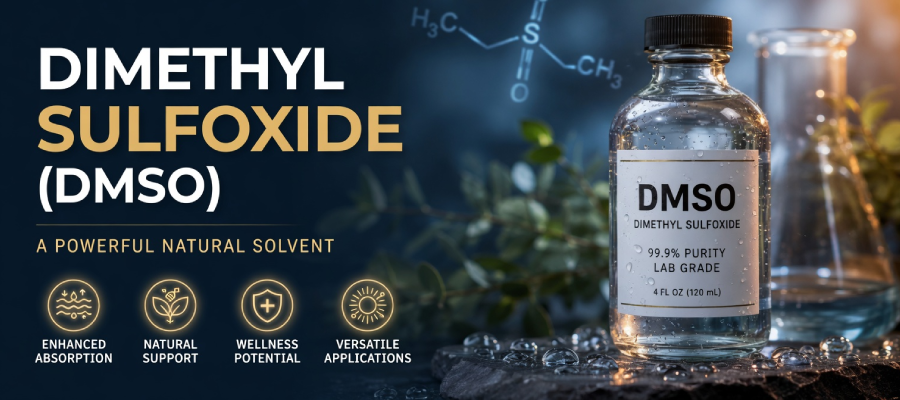
Most people have never heard of DMSO. For most people familiar with it, it’s usually a curiosity, something mentioned in alternative health circles or veterinary supply catalogs, but rarely in a clinical context. Of course, that gap between its reputation and its actual therapeutic record is worth examining. DMSO stands for Dimethyl Sulfoxide, which is an organic sulfur-containing compound derived from wood pulp. Its defining characteristic is an almost unmatched ability to rapidly penetrate biological membranes. That single property, combined with its sulfur content and anti-inflammatory mechanism, is what makes it relevant to a much broader range of health applications than most practitioners are trained to recognize.
The Critical Role of Sulfur in Human Health
In many ways, the key to DMSO’s effectiveness lies in its sulfur content. I have written about this several times, but sulfur is a crucial element in human biology, involved in numerous vital processes. Unfortunately, many don’t get near enough.
Sulfur is essential for synthesizing critical amino acids, such as cysteine and methionine, which serve as the building blocks of proteins. Furthermore, sulfur is integral to maintaining healthy connective tissues, such as cartilage, ligaments, and tendons, through compounds like glucosamine sulfate and chondroitin sulfate. It also significantly supports liver detoxification and promotes healthy skin, hair, and nails. By facilitating rapid, efficient sulfur delivery directly into cells, DMSO can actually enhance essential biological processes, making it highly valued in therapeutic applications.
Health Applications of DMSO
In medicine, DMSO is celebrated for its potent anti-inflammatory and analgesic (pain-relieving) effects. It is commonly used topically to treat conditions like arthritis, sports injuries, and inflammation-related discomfort. Additionally, DMSO’s strong solvent properties enhance its effectiveness, enabling it to deliver other medications through the skin and ensuring rapid, deep penetration into affected tissues.
DMSO is also an FDA-approved treatment for symptoms associated with interstitial cystitis, a chronic bladder condition causing pelvic pain and frequent urination. But more than that, its antioxidant properties help mitigate free radical damage, potentially reducing the risk or severity of certain chronic diseases. Of course, these are the applications most consumers are familiar with, but the therapeutic profile extends far beyond what most realize.
Lesser-Known Uses and Benefits
Beyond its established applications, DMSO has potential in several areas that receive little mainstream attention. For example, wound healing is one of the more clinically plausible extensions of its core mechanism. By reducing localized inflammation and improving circulation to damaged tissue, DMSO creates conditions that support faster repair. Now, I need to make this point clear. This use is not a departure from its known properties. If anything, it is a direct application of them.
Neurological applications are another popular claim. Granted, they are more speculative, but they are mechanistically grounded. Neuroinflammation is a contributing factor in conditions ranging from neuropathic pain to neurodegenerative diseases like Alzheimer’s and Parkinson’s. DMSO’s ability to cross the blood-brain barrier, a capability most anti-inflammatory compounds lack, positions it as a compound worth serious investigative attention in this space. Some would argue that large-scale trials are limited. That’s true, but with a little digging, you’ll see that early research and clinical observation suggest a benefit.
As a cancer adjuvant, DMSO has shown some early promise in improving the delivery of chemotherapeutic agents. Its carrier properties, the same ones that make it effective topically, may allow certain drugs to reach target tissues more efficiently while potentially reducing systemic toxicity. Granted, this remains an area of active interest rather than established protocol, but the mechanistic rationale is sound.
Hair growth represents a more modest application. Improved local circulation and nutrient delivery to follicles are the proposed mechanisms. It makes sense, and anecdotal reports are consistent with that explanation, even if controlled research is limited.
Granted, evidence for these “lesser-known uses” remains preliminary or mixed. Consider them as “strong potential,” “promising,” or even “investigative interest” rather than “demonstrated” or “RCTd.” At the same time, understand that, mechanistically speaking, its potential extends well beyond what I have mentioned here. You can do your own research on that.
Why DMSO Works So Effectively
The remarkable efficacy of DMSO is primarily due to its rapid permeation of biological tissues and cell membranes. Once absorbed, it exhibits strong anti-inflammatory effects by blocking inflammatory cascades and neutralizing free radicals. Its sulfur content also plays a critical role, as sulfur is essential for forming connective tissue, maintaining cellular integrity, and supporting the detoxification processes within the body.
Why DMSO Remains Underutilized
Despite its documented and anecdotal benefits, DMSO has not achieved mainstream clinical adoption. There are probably several reasons that are worth understanding:
- Curriculum Gap:
- This is as simple as it gets. DMSO receives minimal coverage in standard medical training. I know because I’ve asked. But that also means that practitioners who are unfamiliar with it are not negligent; they are simply working within the boundaries of what they were taught. While very limiting, it could be argued that it’s the responsible thing to do.
- Economic Factors:
- This one makes the most sense to me. Being inexpensive, non-patentable, and widely available, DMSO offers limited financial incentive for pharmaceutical development or promotion, which directly affects how much research funding and clinical attention it receives.
- Regulatory Ambiguities:
- Its dual status as both an industrial solvent and a medical agent has complicated regulatory approvals. DMSO is one of those things that can be hard to wrap your head around. The downside is that it often leads practitioners to hesitate when they rely on clear institutional guidance.
- Perception Issues:
- As always, perceptions can block perspective. I would argue that historical overstatements or misuse in alternative medicine circles have largely contributed to cautious or dismissive attitudes within the conventional medical community. Unfortunately, this has led to the compound itself being conflated with the credibility of those promoting it.
Understanding the Side Effect Profile
All that said, we also need to understand that DMSO is neither perfect nor harmless. However, DMSO carries a reputation for side effects that is largely disproportionate to the clinical reality. The most commonly reported effects, such as mild skin irritation, a garlic-like breath odor, or temporary taste alterations, are minor and transient.
More severe reactions are rare and generally associated with improper use or impure preparations. This is to say that when properly sourced and administered responsibly, DMSO has a notably favorable safety profile. Readers who have encountered strong warnings about DMSO are often reading concerns rooted in misuse scenarios, not the compound’s inherent properties or benefits.
Finding DMSO Today
Contrary to what many might have heard, DMSO is not banned or removed from the shelves. Today, DMSO is readily accessible from reputable health supplement stores, online vendors, veterinary supply stores, and compounding pharmacies. One can note a suspicious effort to scare people away from it, much like with other cheap, highly effective substances.
But we can use such warnings to our advantage. Ensuring the purchase of pharmaceutical-grade DMSO from credible sources remains vital to achieving maximal therapeutic benefit while minimizing risk. Just be a wise consumer. Your health is a valuable investment, so don’t compromise for cost and always choose products from reputable companies.
Clinical Warning and Clarifications
While DMSO generally has a favorable safety profile when used responsibly, its potent carrier properties pose its primary risk, enabling rapid transdermal transport of both beneficial and potentially harmful substances into the bloodstream. Minor, transient side effects such as skin irritation, garlic-like breath odor, and temporary taste changes predominate, whereas severe reactions remain rare and typically stem from impure industrial-grade products, improper dosing, or unintended chemical interactions.
Pharmaceutical-grade DMSO from reputable sources must be used exclusively; it should never be combined with unknown compounds, pesticides, or unapproved substances, as illustrated by documented cases such as the Riverside Toxic Lady incident, which involved cross-contamination. Safe application requires moderation, proper technique, and professional guidance when uncertain. That said, the compound’s documented risks remain disproportionately emphasized relative to its clinical record, with fatalities from properly administered pharmaceutical DMSO being exceptionally uncommon compared to everyday hazards such as hyponatremia.
Final Thoughts
Ultimately, I want to convey that DMSO is not some fringe compound awaiting legitimacy. It is an affordable, well-characterized therapeutic agent with FDA approval, decades of clinical use, and a solid safety profile. The skepticism surrounding it says more about the economics of drug development and the gaps in standard medical training than it does about the compound itself. Informed consumers and open-minded clinicians who take the time to examine the actual evidence tend to reach the same conclusion: DMSO deserves a place in the conversation that its current reputation has denied it.
If you would like to learn more about sulfur and Alzheimer’s and Parkinson’s diseases, read my article “Desulfovibrio and Parkinson’s: Misleading Connection?“
Dr. Robertson is a health researcher and educator, not a physician. The information provided here is not medical advice, a professional diagnosis, opinion, treatment, or service to you or any other individual. The information provided is for educational and anecdotal purposes only and is not a substitute for medical or professional care. You should not use the information in place of a visit, call, consultation, or the advice of your physician or other healthcare providers. Dr. Robertson is not liable or responsible for any advice, course of treatment, diagnosis, or additional information, services, or products you obtain or utilize. IF YOU BELIEVE YOU HAVE A MEDICAL EMERGENCY, YOU SHOULD IMMEDIATELY CALL 911 OR YOUR PHYSICIAN.