The Story We Stopped Telling
We recently celebrated Juneteenth in the United States. Of course, I’m often the one who says, “We can celebrate history by knowing it.” Well, a Juneteenth post that crossed my feed was built around a rather confident claim. It said, Silence can be a microaggression. When a workplace fails to acknowledge Juneteenth, it communicates that Black pain is optional history, and the employees carrying that history are left to carry it alone. Of course, the post goes on. And yes, the post was well-constructed and sincere, and I would say that at least parts of it are true. However, what struck me was that the contrast I expected to find was simply not there. Let’s correct that.
Let me concede to the idea that American chattel slavery, as it matured, was a system of permanent, inheritable bondage assigned by race, and what was done to the men and women held inside it was a moral catastrophe. Indeed, the memory is owed, and Juneteenth marks something worth marking. And none of what follows is an argument against remembering. However, it is an argument against remembering only one part of it.
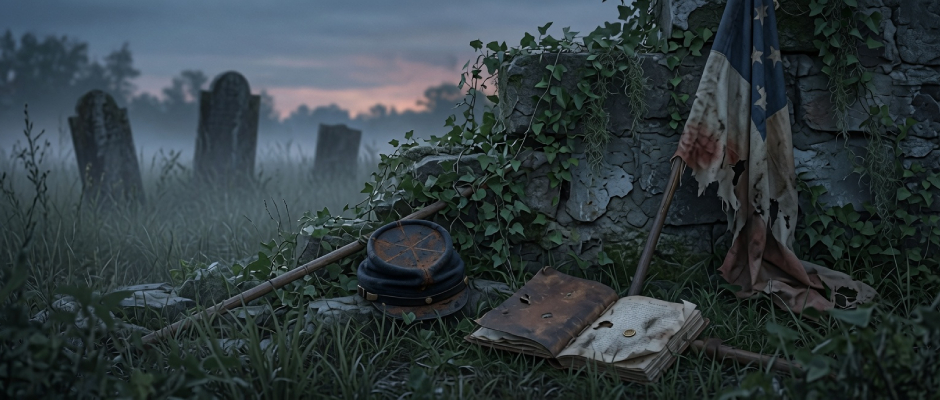
Because the version of this history that now circulates has quietly narrowed a national story into a sectional one. This narrative speaks of one group’s suffering as though the rest of the country were either absent or complicit, and in doing so, it erases the people who paid the price for emancipation with their lives. Part of this memory should include the roughly three hundred sixty thousand Union soldiers who died in the war that ended slavery. We should acknowledge that the overwhelming majority of them were white, most would never gain a thing from the freedom they secured, and they died in numbers this country has never matched in any conflict before or since.
I’ll say this as plainly as I can. If the absence of acknowledgment is a wound, then we have a great deal of unacknowledged death to answer for. It really is that simple.
But let’s also understand that the labor system that those soldiers eventually died to dismantle did not begin as a simple matter of one race holding another. The early colonies ran on bound European labor, much of it Irish and Scottish, some of it shipped over as punishment after Cromwell’s campaigns, much of it sold under contracts of indenture that were unbelievably brutal in practice and frequently fatal. Many of these supposed servants died before their terms expired. In many circumstances, terms were extended as a form of discipline. In fact, the legal distinction between a servant who might one day go free and a slave who could buy his freedom would mean little to a man who worked to death before either day arrived.
The point is that the racial slavery we remember today was not the colonial starting point. It was inherited by the Europeans, who long preceded the idea of a free nation. If anything, it was the hardened endpoint of a process in which colonial law deliberately drew a line between European and African labor and then made that line permanent and heritable.
Frankly, that detail matters because it tells us the racial system was built. Human beings constructed it, statute by statute, out of an older and more universal practice. Understand that slavery itself was not an American invention or a Southern peculiarity. Nearly every civilization in recorded history practiced it. It was woven through the ancient Mediterranean, the medieval Islamic world, the West African kingdoms that supplied the Atlantic trade, and the many empires of the Americas before any Europeans even arrived. The Barbary states enslaved over a million Europeans across three centuries. Native nations on this continent held slaves, including Black slaves. And thousands of free Black Americans owned slaves as well. The institution was a human institution, and it was very nearly everywhere.
But something happened. What was rare, almost unique, was abolition. Most societies that practiced slavery never developed from within themselves the moral conviction and the raw force required to end it. But the United States did, and doing so nearly tore the country apart. This is the part that the narrowed story cannot accommodate, because it doesn’t fit a frame in which one group is owed acknowledgment by everyone else. The end of American slavery was not a gift handed down by the guilty. It was a national act of self-correction, argued for over decades, voted on, preached, and finally paid for in mass graves filled with men of every color who had finally decided to fulfill the abolitionists’ promise at the country’s founding.
It wasn’t a contradiction from the founding. It was a vision to seek out and achieve. But that takes time. The men who declared in 1776 that all were created equal built that declaration ON TOP of an existing economy that held human beings as property. Eighty-seven years separate that declaration from the moment news of freedom reached Galveston. Those eighty-seven years are an account of how an entrenched institution thousands of years old actually comes apart, which is to say slowly, against ferocious economic resistance, and at staggering cost. A nation does not simply unmake in a generation what the species spent its entire history building. To believe otherwise is both ignorant and unreasonable.
So here is the contrast the original post was missing, and the reason I could not let it pass. Juneteenth, told fully, is not the story of one group’s pain set against everyone else’s silence. It is the story of a country that generated, from within itself, the will to destroy an institution almost no one else had ever voluntarily abolished, and that paid for it with the lives of hundreds of thousands of its own across every line we now use to divide the memory. The freedom delayed was real, but the freedom delivered was a shared achievement, and the blood spent buying it was shared blood.
Martin Luther King, Jr., had a dream that one day all men would be judged by their character rather than their skin color. I share that dream, but I also dream of a future in which we can stand before our history together and recognize it as OURS. Not theirs. Truly, ours. This is to say that the hardship belonged to many people, the remedy belonged to all of them, and the day we can hold both at once is the day the wound the post describes finally begins to close.
Forgotten Black Leaders of Reconstruction
Truths About Black Slavery
Give Some REAL Thought to the Civil War