Let’s call it what it is. You’re being manipulated about data centers, and if you want it to stop, you need to do some critical thinking. I don’t want you to take my word for it. However, I do want you to consider a few things before you make up your mind…
Artificial intelligence and robotics are rapidly moving capability away from institutions and toward the individual. Personal AI systems already perform research, analysis, coding, design, financial modeling, and decision support that once required specialized teams or a professional office. Robotics extends the same principle into physical work such as fabrication, maintenance, logistics, monitoring, and basic care. This will only increase in the coming years (if we allow it).
So, what does this actually mean? Well, the practical result is a measurable reduction in the need for intermediaries. Knowledge no longer has to pass through a licensed gatekeeper, many goods no longer require a factory floor, and diagnostics can begin with tools a person controls instead of an appointment calendar someone else controls. The point is that when the tools become widely available, the dependency that once bound people to organizations begins to shrink. Now, think about what that truly means… for YOU.
Dependency Has Always Been a Source of Power
I don’t really know how else to say this, but those who oversee dependence have historically held power because of it. Medieval manorial systems bound peasants to land and lord for food and protection, and authority concentrated in the few who controlled access. Modern bureaucratic states achieved similar results through different means: licensing regimes, credentialed expert classes, centralized services, and administrative agencies whose size tracks the volume of public reliance they manage.
What I need you to understand is that the more people require a service they cannot replicate on their own, the more durable the position of whoever controls it becomes. Think about that in almost any context (even relationships). Power accrues to the overseer of the dependent because the dependent lacks ready alternatives. It is truly that simple.
Interestingly, this pattern doesn’t require villains, and it’s actually quite predictable (and understandable). Incentives shape behavior, and institutions whose budgets, staff, and authority rest on managed dependence will tend to resist anything that makes them less necessary. No secret meeting has to occur for the resistance to be real. It’s probably enough that many influential people would lose position if ordinary citizens no longer needed them. However, to truly appreciate this point, you have to be willing to accept that you’ve been placed in a position of dependency (whether you wanted it or not).
Why the Data Center Became the Target
You may have noticed a massive push against data centers. The reasons given are often emotional, and that’s the clue. They can manipulate you when you’re emotional. It’s significantly harder to manipulate you when your critical thinking is elevated. This is why children are so easy to indoctrinate.
Take what I’m about to say and truly ponder it. Read it several times if you can. What I’m about to say is extremely important.
Openly campaigning against personal capability would fail, because few people want to be told they should have fewer tools. Data centers present a far more practical (and emotional) target. They are ugly, expensive, and in some cases, mysterious. “Scary stuff.” But also emotional triggers that can be exploited.
At the same time, advanced AI models require enormous computing capacity to train and to serve millions of users at once, and personal hardware cannot yet deliver that capability at useful speed and cost. Data centers supply it. Hence, if you want the powerful tools, you need the powerful backbone.
The trick here is that opposition framed around electricity rates, water, noise, or local zoning attacks AI’s physical foundation without ever having to argue against the tools themselves. The framing is harder to recognize, and it recruits people who would reject an explicit campaign against their own empowerment. The odd part is that any level of critical thinking or research shows that most of the arguments are inaccurate and/or temporary. For example, even Larry Page has reportedly stated that about 99.999% of such computing will end up in space.
The Scale of the Campaign
The numbers are no longer small or local. Data Center Watch, which tracks local opposition, reported that at least 75 data center projects worth roughly $130 billion were blocked or delayed in the first quarter of 2026 alone, roughly matching the total for all of 2025. Another 45 projects worth about $68 billion were blocked or delayed between April and June. The same tracker counted 833 organized opposition groups across 49 states, double the prior year. Local governments in 40 states now have an active data center ban or moratorium; New York became the first state to impose a statewide moratorium, and reportedly, some 500 proposed bills aim to stop data center construction in the US.
The ballot box has followed. On November 3, voters in ten states faced 41 local data center measures, 28 of them designed to restrict development. Early counts showed the restriction side prevailing in the large majority of those contests. Monterey Park, California, became the first American city to permanently ban data centers by popular vote, with more than 86 percent in favor, a ban reversible only by another public vote. Nationally, more than 230 environmental and health organizations have signed a letter calling for a moratorium on all new data center construction in the United States.
So, you’re telling me that people want to stop progress on self-empowerment tools? That doesn’t make much sense, does it? Without getting into the weeds of how this works, I’ll just say that a “movement” that coordinates across dozens of states, includes millions of dollars, shares legal strategy, and pursues permanent prohibition isn’t a movement. That’s actually a campaign by any reasonable definition. You’re being manipulated. Accordingly, you need to pay attention, because there is a noticeable theme about those driving it.
Grassroots or Orchestrated?
The Contrastive Inquiry Method is absolutely necessary here, because a claim this serious deserves testing against its strongest alternative. The competing explanation holds that the opposition is simply organic: ordinary residents worried about their power bills and water supply. Yes, after some initial manipulation, that explanation has real support. Gallup found in March 2026 that 71 percent of Americans oppose an AI data center in their area. A Penn survey found local opposition rising 12 points in four months, and Quinnipiac found that 72 percent of opponents cite electricity costs. The opposition crosses party lines.
Now, some investors and officials have rumored that China was secretly funding the movement. And it is true that organizations like NPR found little direct evidence to support it, but that’s actually beside the point. They didn’t investigate those sympathetic to the Chinese cause.
Regardless, you should know that evidence for organized amplification exists. And frankly, that might be the biggest tell. Public tax records show that foreign philanthropic money has flowed to national advocacy groups that signed the moratorium letter, including nearly $14 million from a single Swiss billionaire to four of the signatories. Moreover, national organizations have mobilized local chapters to fill public meetings and fight zoning approvals in multiple states. The list goes on.
So, whether emotionally manipulated or not, local concern is now real. A lack of understanding often turns into fear, and developers, AI companies, etc., have done a piss-poor job of informing people about the true nature of these projects. People seem to have missed that data centers can provide measurable economic benefits, such as increased local employment, higher wages, and business growth. Those same people also haven’t heard that data centers can actually contribute to the electric grid by using on-site generation or energy storage to supply power back to the grid, especially during peak demand times. By the way, this actually helps stabilize the grid and reduces reliance on central power sources, making it a beneficial strategy for both data centers and utilities.
The point is that the concern is real, but most people haven’t heard about the benefits or the downstream effects. We all need to appreciate that organized actors with national reach convert that concern into something much larger than it would otherwise become. Think about it. A reasonable worry about a specific power contract becomes a permanent citywide ban. A question about one facility’s water use becomes a demand for a national moratorium. These are not accidents. Nonetheless, the origin of each individual worry matters less than the outcome the campaign produces: less computing capacity, built more slowly, concentrated in fewer hands, under more permission from the institutions that already hold power.
Who Is Leading the Charge
If you’re paying attention, you might have noticed that the loudest calls to halt this infrastructure come from inside government. In March 2026, Senator Bernie Sanders and Representative Alexandria Ocasio-Cortez introduced the AI Data Center Moratorium Act, which would stop all new AI data center construction nationwide until Congress passes federal AI legislation they consider strong enough. Sanders has since called for an immediate pause on advanced AI development and a permanent ban on superintelligence.
In September, he and Representative Greg Casar introduced the Ban Artificial Superintelligence Act, which would create a new federal Department of Artificial Intelligence and pause advanced AI development until that department is fully staffed and has written its rules. On November 4, Representative Yassamin Ansari wrote that the top of the Democratic agenda on day one needs to be a pause on advanced AI development, regulation of the industry, and a ban on artificial superintelligence.
The same pattern runs through state and local government. New York’s statewide moratorium came by executive order, and city governments from Monterey Park to Denver imposed moratoriums before voters weighed in. The remedy these officials propose follows the logic already described: halt the tool that reduces dependence, then build a new administrative structure to decide when, and whether, it may proceed. A pause that ends only when a new federal department declares itself ready has no natural end.
Because of a massive, well-funded campaign, public opinion now leans the same way. But the theme is also becoming clearer. Gallup found opposition to a local AI data center heavier with Democrats. A New York Times/Siena poll found similar differentials. Politico’s polling found Democratic opposition growing much faster than Republican opposition. So, let’s frame this another way. It seems to me that the voters and officials most comfortable with expansive government are leading this campaign from positions of public authority.
It is therefore notable and confusing that so many people who describe themselves as favoring independence, limited government, and personal empowerment have joined or tolerated the campaign. In most national polls, roughly half or more of Republicans oppose a data center near them, and 58 percent of Republicans in one survey supported pausing construction for at least a year. Senator Josh Hawley has introduced a similar bill. The irony is that the cost and community framing has recruited exactly the people who would reject the campaign if it were presented plainly as a call for more government control over personal capability.
What Is Actually at Stake
Make no mistake: the tools under attack address problems that impose real costs on real people. AI is already accelerating drug discovery, reading medical images, assessing individual health risk, and assisting in surgery. Home systems for monitoring, medication management, and basic physical support allow people to stay out of institutional care longer. Individuals with limited business or computer skills are opening up various businesses. These gains are measurable and growing, by the way. The larger stake, however, is independence itself.
Thomas Paine wrote in Common Sense that “Society in every state is a blessing, but Government, even in its best state, is but a necessary evil; in its worst state an intolerable one.” He reasoned that security is the true purpose of government, so that “whatever form thereof appears most likely to ensure it to us, with the least expense and greatest benefit, is preferable to all others.” Well, if you think about that for a second, you will likely agree that for the first time in history, tools exist that can perform a growing share of administrative functions at lower cost, with greater consistency, and with less vulnerability to partisan capture or individual error. What’s not to love?
Take a moment to think of everything the government does. Now, ask yourself, how many of those things can robots and AI already perform faster, more efficiently, and more cheaply? Permit review, benefits administration, inspection scheduling, web design, records management, and many forms of regulatory analysis are already within reach of automated systems. For each system we can take away, we reduce the size and power of the government.
So, are we seeing this “anti-superintelligence” campaign because those in power know these truths? Paine’s standard of least expense and greatest benefit has never been more achievable. However, I would argue that those whose positions depend on the current scale of administration can see that as clearly as anyone. I would also argue that the focus on the infrastructure that makes it possible follows from that recognition.
How a Narrative Becomes a Prohibition
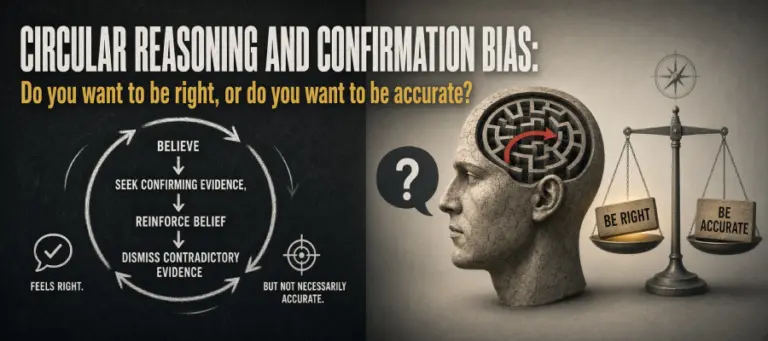
Yes, change creates uncertainty, and uncertainty easily becomes arguments for delay or prohibition. The mechanism is predictable. Fear of a higher electric bill is an emotion, and emotion shapes which information people notice and trust. That filtered information hardens into belief; belief drives behavior at the ballot box and in the zoning hearing, but we should all be aware that the behavior produces outcomes that outlast the original fear by decades. A permanent ban passed in a single anxious election season does not expire when the anxiety does. Ultimately, the downstream cost is more government and less individual power.
Modern influence campaigns operate through exactly this channel. Fifth-generation warfare, as strategists describe it, works through narrative and perception rather than physical force, and its objective is to shape the decisions people make about their own capability and risk. The campaign against data centers fits that pattern rather closely. It never asks citizens to give up their independence directly. It asks them to give up the infrastructure their independence will run on, one local vote at a time. Sadly, many have fallen for it.
What Resistance Looks Like
Resistance begins with refusing to accept a frame you haven’t examined. When a data center is proposed in your community, read the actual proposal and the utility filings yourself instead of relying on a flyer or a Facebook group. Ask specific questions that have specific answers: who pays for grid upgrades, whether the facility uses closed-loop cooling or draws on the municipal water supply, what the tax agreement requires, and what happens if the developer fails to meet its commitments. Those questions protect your community far better than a blanket ban, and they separate genuine concerns from manufactured ones. At the same time, you will likely discover that the answers are not as extreme as you were led to believe.
Resistance also means following the money in every direction. Who funds the groups organizing against a project? Ask the same of the developers and the political action committees promoting it. Distinguish between enforceable conditions (which a community has every right to demand) and permanent prohibitions, which surrender a decision your children should be free to make. Then, simply show up. Attend the zoning hearing, speak during public comment, and vote on the measure, because organized campaigns win local contests precisely because most residents stay home.
Also, take a moment to ask yourself: “Who truly benefits if these tools are shut down?” Then, think downstream. If Larry Page and Elon Musk are correct that orbit will soon be the most economical place for AI computing, then today’s data centers are temporary inconveniences that boost local economies and pave the way for a long-overdue future. And when they do go orbital, wouldn’t that create even more jobs to tear down or repurpose the existing data centers?
Regardless, we should never lose sight of the fact that these tools might very well be the key to everything so many of us have been dreaming about for years. After all, they reduce your dependency on the experts, agencies, and gatekeepers who have long decided what you may know, build, and do for yourself. More pointedly, they reduce your dependency on anyone who profits from your needing them.
I will leave you with one final piece of advice. When an argument leaves you afraid and in a hurry, that is the exact moment to slow down and check what you are being asked to give up tomorrow in exchange for feeling better today. Never forget that the people who benefit from your dependence have every reason to keep you anxious and unexamined. Your mind remains the target. Your future is the prize. Act accordingly.
References
AI Weekly. (2026). Democrats see data center backlash as a rare bipartisan opening. https://aiweekly.co/alerts/democrats-see-data-center-backlash-as-a-rare-bipartisan-opening
Axios. (2026, March 25). Sanders and AOC unveil data center moratorium bill. https://www.axios.com/2026/03/25/sanders-aoc-data-center-moratorium-bill
Axios. (2026, September 3). Bernie Sanders floats ban on superintelligent AI. https://axios.com/2026/09/03/bernie-sanders-superintelligence-ban-ai-pause
Ballotpedia News. (2026). Voters in ten states will vote on data center-related ballot measures November 3. https://news.ballotpedia.org/?p=52125
Broadband Breakfast. (2026, June 5). Monterey Park votes to permanently ban data centers. https://broadbandbreakfast.com/monterey-park-votes-to-permanently-ban-data-centers/
Data Center Watch. (2026). Q1 2026: Data Center Watch report. https://datacenterwatch.org/q1-2026
Decrypt. (2026). AI billionaires fund ad blitz as data center opposition hits 61%. https://decrypt.co/377162/ai-billionaires-fund-ad-blitz-as-data-center-opposition-hits-61
E&E News. (2026, July 17). Democrats drive voter opposition to data centers, POLITICO Poll finds. https://www.eenews.net/articles/democrats-drive-voter-opposition-to-data-centers-politico-poll-finds/
Gallup. (2026). Americans oppose data centers in their area. https://news.gallup.com/poll/709772/americans-oppose-data-centers-area.aspx
Let’s Data Science. (2026, September). New York Times/Siena poll finds broad opposition to AI data centers. https://letsdatascience.com/news/new-york-timessiena-poll-finds-broad-opposition-to-ai-data-c-31abf95e
NPR. (2026, June 10). The theory taking the rich by storm: China funds data center haters. https://www.npr.org/2026/06/10/nx-s1-5844328/us-china-data-centers-foreign-influence
Paine, T. (1776). Common sense. Project Gutenberg. https://www.gutenberg.org/ebooks/147
PhillyVoice. (2026, August 11). Americans are increasingly opposed to data centers, Penn polling finds. https://www.phillyvoice.com/data-center-opposition-survey-polling/
Quorum Report. (2026). Poll finds 65 percent of Americans oppose construction of data centers in their communities. https://www.quorumreport.com/Quorum_Report_Daily_Buzz_2026/poll_finds_65_percent_of_americans_oppose_construc_buzziid33188.html
S&P Global. (2026, October 1). Data center backlash shapes midterm ballots, campaigns across US. https://www.spglobal.com/energy/en/news-research/latest-news/electric-power/100126-data-center-backlash-shapes-midterm-ballots-campaigns-across-us
The Standard. (2026, November). Democrat calls for AI development pause and superintelligence ban. https://www.thestandard.com.hk/world/article/347702/Democrat-calls-for-AI-development-pause-and-superintelligence-ban
Tom’s Hardware. (2026). Local opposition blocked $68 billion worth of data center projects in the second quarter of 2026. https://www.tomshardware.com/tech-industry/data-centers/local-opposition-blocked-usd68-billion-worth-of-data-center-projects-in-the-second-quarter-of-2026-data-center-investments-reportedly-still-on-track-to-hit-usd32-trillion-by-2050
Venable LLP. (2026, November 4). Voters approve data center restrictions at the ballot box. https://www.venable.com/insights/publications/2026/11/voters-approve-data-center-restrictions
Washington Examiner. (2026). Foreign cash is sabotaging America in AI race against China [Commentary]. https://www.washingtonexaminer.com/?p=4530518
Washington Free Beacon. (2026). Foreign donors fuel US data center opposition, records show. https://freebeacon.com/china/foreign-donors-fuel-us-data-center-opposition-records-show/